Wine Notes
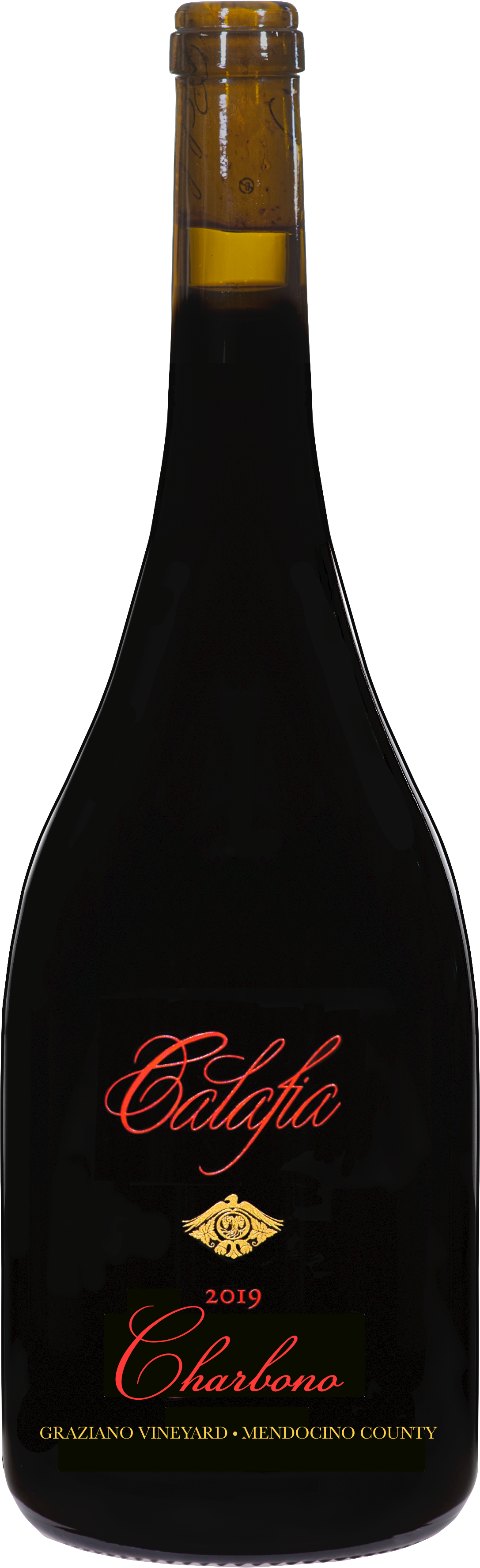 Vintage:
2023
Appellation:
Mendocino County
History:
Truly a unique and remarkable heirloom variety, Charbono’s birthplace is the Savoie in the foothills of the Alps where it is known as Douce Noir (Sweet Black). It was cited in an official letter dated November 24, 1803, as the main variety in Savoie. Charbono was also known as Corbeau Noir (Black Raven) and in the Jura foothills it was called Charbonneau. It migrated to the Piemonte in northern Italy and became confused with Barbera and Dolcetto. Italian immigrants took it to Argentina where it became known as Bonarda and today there are over 45,000 planted acres. Italian immigrants also brought it to California where it became known as Charbono. Originally called Barbera at Inglenook and Pinot Noir at Parducci, it was in the late 1930’s that Dr. Harold Olmo, a brilliant ampelographer and grape breeder at UC Davis, found both plantings to be Charbono. Inglenook first bottled Charbono as a varietal in 1941, and along with Beaulieu and Parducci formed The Charbono Society in the late 1940’s and hosted several elaborate dinners celebrating its long-term aging ability. In 1999 Dr. Carole Meredith used DNA profiling to determine Charbono, Douce Noir, Corbeau Noir and Bonarda were all genetically identical, truly an historic moment! In California, like Argentina, Charbono gravitated to more warm districts as it is a very late ripening variety and is burdened with Leaf Roll Virus. In the early 1980’s there were 100 acres planted in California and in 2023 down to about 80 acres. Napa Valley’s Calistoga, where it is 10° warmer than mid-valley, is the epicenter where currently there are about 10-12 producers.
Vineyard:
The vineyard, located in the warm Calpella district of Mendocino County is owned and farmed by tenacious high school sweethearts Eddie and Frankie Graziano now for over 50 years! Eddie’s grandfather, Vincent, planted the first “virus free” vines in the 1940’s. Eddie added another block in 1974. This wine is dedicated to Eddie’s memory, having passed in the spring of 2024.
Vintage Notes:
The 2023 growing season started out with a whopping 54” of rain; 3 times the 2022 season. It rained into the spring, so flowering and fruit set were late. Set was finalized in May and revealed a large crop. Summer and fall weather was “normal” and harvest was smooth. In retrospect, many vintners view the 2023 wines as the best in a decade!
Fermentation & Aging:
The grapes were crushed on October 13th, a week earlier than 2022. The Brix was an impressive 23.9°, acid was 4.3g/liter and the pH was an excellent 3.67. Cold soak and fermentation was about 12 days; using pigéage 3-4 times/day to submerge the cap. Gentle pressing was done using a modern basket press. The wine was aged for 20 months in tight-grain French oak, 30% new. The wine was bottled on July 20, 2025.